











ملصقات وملصقات مخصصة
Wine Bottle Labels Design Specs, File Setup and Compliance Checklist

مارس
Custom Labels & Stickers • B2B compliance guide
Wine Bottle Labels Design Specs, File Setup and Compliance Checklist
Projects involving wine bottle labels tend to move smoothly when the technical details are settled before the press schedule is locked. Most avoidable delays come from missing information in the artwork, unclear variable-data rules, untested material assumptions or supplier conversations that happen…

Table of contents
Jump to the section you need
B2B reading focus
What a buyer, procurement lead or project owner should confirm
- Check specification completeness, approval ownership and compliance details before sampling starts.
- Confirm how artwork, variable data, batch details and print tolerances will be controlled across repeat orders.
- Match lead time, shipping market and adjacent pack components before the brief is treated as quote-ready.
Where technical and compliance issues usually appear
Compliance and technical mistakes usually begin at the specification stage. A size is assumed instead of confirmed, a data field is left to the last minute, or the artwork is approved before the material and finish route have been settled. For wine bottle labels, those gaps can create costly friction because the finished result has to satisfy both visual and functional expectations. Teams that treat the project checklist seriously tend to catch issues while they are still easy to correct.
That kind of discipline is especially useful for teams that manage packaging across several stakeholders. Designers may focus on appearance, procurement may focus on timing and cost, and compliance reviewers may focus on required content or traceability. A checklist keeps those priorities visible at the same time instead of allowing the project to move forward with unresolved contradictions.
Artwork and file setup checkpoints
Artwork and file setup deserve more attention than many buyers expect. The layout should make room for the real production needs of the job, whether that involves barcode readability, ingredient or usage text, batch coding, and shipping durability, structural tolerances or specific inspection or readability rules. That does not mean the design has to become cluttered. It means the file should be built so the intended hierarchy survives real manufacturing conditions. Clean approvals at this stage reduce proofing delays and make supplier communication much more precise.
When a project includes barcode readability, ingredient or usage text, batch coding, and shipping durability, the file should be structured so those elements remain clear after finishing, scaling and production tolerances are considered. That may sound obvious, but it is one of the easiest areas to overlook when a team is moving quickly. Cleaner file setup at the beginning usually leads to cleaner approvals later.
Material, finish and performance checks
Material and finish choices should then be checked against how the piece will actually be used. The same category label can cover very different real-world situations, which is why factors such as surface energy, moisture exposure, oil contact, and temperature swings should be reviewed in writing. When textured wine papers, wet-strength papers, hot foil papers, and premium uncoated stocks and matte lamination, gloss lamination, spot UV, and foil stamping are treated as interchangeable, production risk increases. A disciplined checklist forces the team to confirm what really matters instead of assuming that any standard stock will be acceptable.
These checks become even more important when the specification must satisfy demanding conditions such as surface energy, moisture exposure, oil contact, and temperature swings. A material that appears acceptable at a glance may become problematic once it meets the real surface, the real handling pattern or the real packing method. The checklist protects the project by making those assumptions visible before they turn into defects.
Supplier questions worth asking early
Supplier screening is not only about price or headline capability. A stronger checklist also asks how the supplier handles sampling, approval, tolerances, variable information, export packing and any special considerations tied to wine bottle labels. Because HKKAYU positions itself as a direct Shenzhen manufacturer, decisions on material, finishing and lead time can be handled closer to production. The more explicitly these points are handled, the easier it becomes to decide whether the supplier is quoting the real brief or a simplified version that may change later.
For buyers screening suppliers, this stage also reveals how seriously the production side treats risk. Suppliers that can explain how they handle materials, approvals, data and tolerance questions usually inspire more confidence than those that respond only in broad claims. In practice, that clarity often predicts how the project will behave once the schedule becomes more demanding.
Approval steps before mass production
Approval and rollout should be treated as separate steps, even when the schedule is tight. Before mass production begins, the team should confirm dimensions, materials, finish direction, file version, coding or data logic, and any other point that would be difficult to reverse later. This step is especially valuable for buyers trying to avoid label edge lift in ice buckets, misaligned front/back sets, flat-looking premium brands, and poor readability on dark glass. A measured approval process is not bureaucracy for its own sake; it is often the simplest way to protect timing and budget.
Approval discipline is often what prevents a small error from reaching a large production run. When the team checks artwork version, material choice, coding logic and finish direction in a controlled way, the chance of rework drops sharply. That protects both the schedule and the budget while reducing the kind of confusion that creates label edge lift in ice buckets, misaligned front/back sets, flat-looking premium brands, and poor readability on dark glass.
Turning the checklist into a stronger project brief
A useful checklist ends with a practical outcome: a clearer brief, a more reliable supplier conversation and a reduced chance of avoidable production errors. For wine bottle labels, that is what helps teams move toward stronger shelf presence, premium tactile branding, better wet-condition performance, and more distinctive bottle presentation. The strongest projects are not the ones with the most paperwork. They are the ones where every essential decision has been made clearly enough that production can start without guesswork.
A well-used checklist is not extra paperwork layered onto the job; it is the shortest route to a dependable brief. Once the essential questions have been answered clearly, the production team can focus on execution rather than interpretation, and the buyer has a stronger basis for expecting stronger shelf presence, premium tactile branding, better wet-condition performance, and more distinctive bottle presentation from the finished order.
How teams use the checklist without slowing the project down
A checklist works best when it is used to answer only the questions that truly protect the project: what the finished item must withstand, what information must be printed accurately, how approval will be documented and what the supplier needs before production starts. That keeps the process efficient while still making sure the important technical details behind wine bottle labels are settled clearly enough to prevent avoidable rework.
Why checklist discipline matters even on familiar projects
Teams sometimes relax the checklist on repeat jobs because the format feels familiar. That is exactly when hidden problems can slip through, especially if artwork, quantity, destination market or production timing has changed since the last order. For wine bottle labels, a short confirmation pass protects the project from assuming that last time’s specification still answers this time’s requirements. It is a small habit that often prevents avoidable rework and keeps the rollout steadier under real deadlines.
What changes when the project needs to be repeated
Many buying decisions feel easier when the team looks beyond the first run. The best specification is not only the one that solves today’s problem; it is the one that can still be produced consistently when quantities change, new SKUs are added or another market version is introduced. For wine bottle labels, repeatability depends on clear artwork control, stable material choices, realistic finishing expectations and a supplier conversation grounded in actual production requirements. That longer view helps turn a one-time order into a packaging standard that is easier to manage over time.
Practical next step
Readers who have narrowed the direction can use the next conversation with HKKAYU more effectively by sharing dimensions, quantity, artwork status and the conditions the finished piece must handle. For wine bottle labels, a supplier discussion becomes far more productive once the non-negotiable details are clear. That is the point where the project can move from general research into a brief that is specific enough to quote, sample and produce with confidence. A better brief not only improves the first order; it also makes repeat ordering much simpler once the project begins to scale. It also gives internal stakeholders a clearer basis for sign-off before materials, artwork and timing are committed. That combination of clarity, repeatability and easier approval is usually what turns research into a project that can be executed with confidence.
المنتجات ذات الصلة
Products this guide helps explain
Use these product options to move from research into real formats, structures and component options linked to the guide.
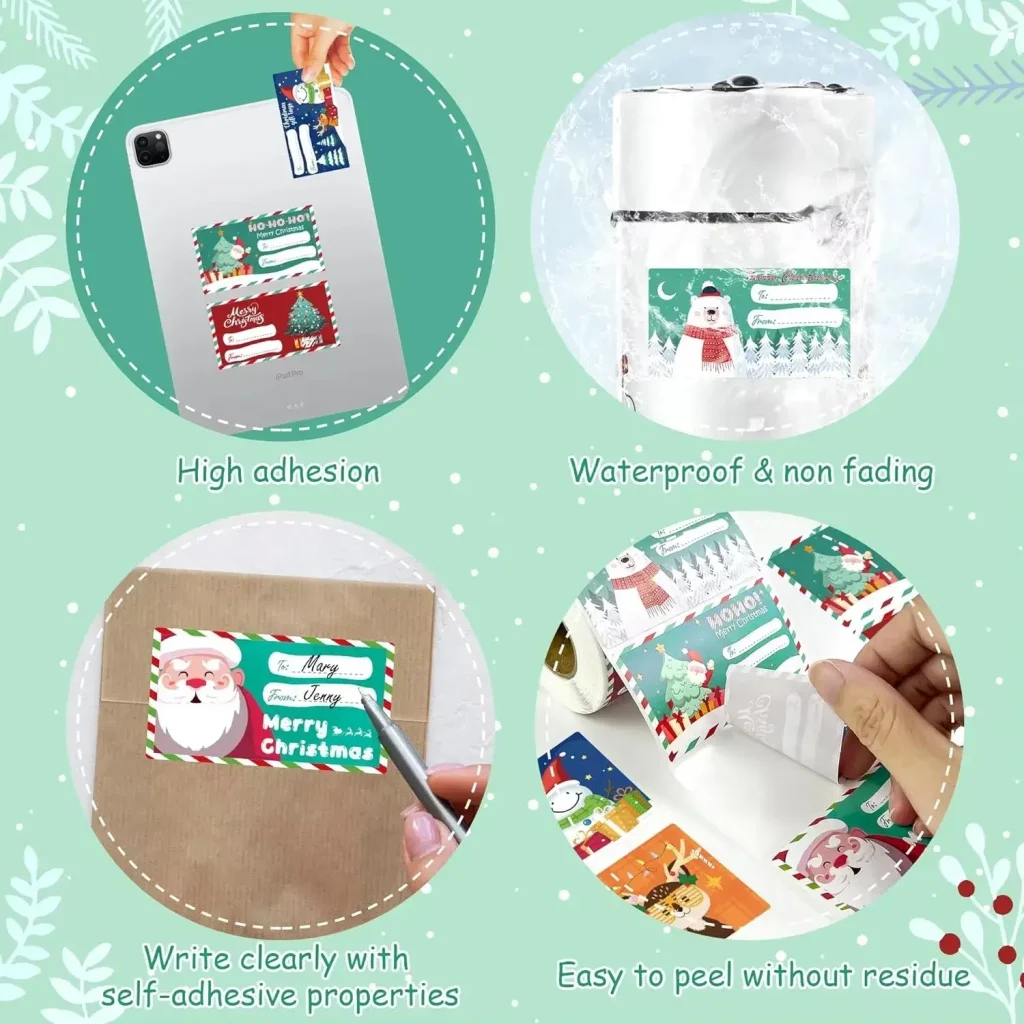 لفات الملصقات المخصصةالسائبة 500 قطعة عيد الميلاد السائبة 500 قطعة عيد الميلاد للماء مخصص مطبوع مخصص تغليف الهدايا ملصق ملصق ملصق لزينة هدايا عيد الميلادراجع ملصق ملصق تغليف الهدايا المطبوع المخصص لتغليف الهدايا المطبوع والمقاوم للماء بكميات كبيرة 500 قطعة لهدايا عيد الميلاد، كخيار ملموس ضمن ملصق الملصق المخصص ...عرض المنتج
 الملصقات والملصقاتملصقات منقوشةراجع الملصقات المنقوشة كخيار ملموس ضمن الملصقات والملصقات وقارن بين اللمسات النهائية والشكل والطلب المناسب لموجزك.عرض المنتج
 الملصقات والملصقاتطباعة ملصق السيارة المخصص طباعة لوحة ترخيص مؤقتة للسيارة، علامة واقية مؤقتة، ملصقات نقل ثلاثية الأبعاد، ملصقات لصق مغناطيسية خارجية، ملصقات فينيل بوليستر بوليستر معدنية من البوليستر والبلاستيكمراجعة طباعة ملصق السيارة المخصص لوحة الترخيص المؤقتة، علامة واقية مؤقتة، ملصقات نقل ثلاثية الأبعاد، ملصقات لاصقة مغناطيسية خارجية، ملصقات فينيل بوليستر بوليستر معدنية فوق البنفسجية بوليستر بوليستر فينيل...عرض المنتج
 الملصقات والملصقاتماء مخصص زيت المحرك البلاستيكي المخصص للعناية بالبشرة بزيت المحرك داخل القالب ملصقات كيميائية IML فينيل ملصقات تنظيف وكلاء التنظيف ملصقات زجاجة الغذاءمراجعة ملصقات الفينيل الكيميائية المقاومة للماء والمخصصة للعناية بالبشرة بزيت المحرك البلاستيكي داخل القالب ملصقات الفينيل الكيميائية IML ملصقات تنظيف مواد التنظيف ملصقات زجاجات الطعام كخيار ملموس ضمن الملصقات ...عرض المنتج
الخيارات المتصلة
Commercial options linked to this guide
These connected options keep the guide tied to the related product categories and core commercial choices buyers usually review before they inquire.
Questions Buyers Often Ask
What label stocks are popular for wine bottles?
Wine projects often use textured papers, wet-strength papers or premium coated stocks depending on the brand look and the handling conditions the bottle will face.
Do wine labels need to handle moisture?
Often yes. Bottles may be chilled, refrigerated or placed in ice service, so wet-strength performance and good adhesive selection can matter as much as the visual finish.
Can embossing and foil be combined on wine labels?
Yes. Many premium wine labels use foil, embossing and selective coatings together, provided the artwork is prepared with enough space and production tolerances are respected.
أدلة المشتري
More buyer guides in the same product family
Continue comparing specifications, approval details and adjacent product choices with these related resources.
ملصقات وملصقات مخصصة
Ready to turn the brief into a practical next step?
Share the main dimensions, quantity, artwork status and delivery destination and HKKAYU can review the job with production reality in mind.
ما الذي يساعد عادةً في البداية
Send a cleaner starting brief
- Surface, adhesive direction and finish expectation.
- Application method, packing format and quantity band.
- Artwork status, approval timing and delivery destination.
Reader Questions
Questions Readers Ask About Wine Bottle Labels Design Specs
This guide is designed to clarify the decisions behind Wine Bottle Labels Design Specs and make the next commercial step more straightforward.
What does this guide explain about Wine Bottle Labels Design Specs?
Use Case / ComplianceWine Bottle Labels Design Specs, File Setup and Compliance ChecklistProjects involving wine bottle labels tend to move smoothly when the technical details are settled before.
Who should read this guide on Wine Bottle Labels Design Specs?
This content is most useful for brand teams, sourcing teams and packaging buyers who want practical context before ordering. It helps turn a broad topic into clearer comparisons that can support sourcing, brand review and production planning.
Which decisions does this guide help with for Wine Bottle Labels Design Specs?
Readers usually leave with a better sense of how to compare adhesion, print sharpness, finish feel, application speed and long-term appearance on the target surface. That makes it easier to judge which specification details matter most before pricing or artwork review.
What details should be prepared before requesting pricing for Wine Bottle Labels Design Specs?
A stronger next step usually starts with size, quantity, application surface, adhesive needs, finish preference, artwork status and delivery details. Those details help the supplier answer with more useful guidance instead of generic assumptions.
What is the practical next step once Wine Bottle Labels Design Specs is understood?
Once the main comparisons are clear, the next move is to gather reference samples, dimensions, artwork direction and quantity plans, then request guidance on the most suitable production setup for Wine Bottle Labels Design Specs.
