



















Boîtes d'emballage sur mesure
Comment choisir un emballage en boîte ronde pour la protection, l'impact sur les rayons et la maîtrise des coûts ?

Mar
Custom Packaging Boxes • B2B buying guide
How to Choose Round Box Packaging for Protection, Shelf Impact and Cost Control
How to choose round box packaging usually works best when the brief starts with operating conditions instead of a visual mockup. For brand owners, sourcing teams and product launch managers, that makes board strength, inserts, finish direction and transit protection easier to…
Table des matières
Accéder à la section souhaitée
Focus lecture B2B
Ce qu'un acheteur, un responsable des achats ou un maître d'ouvrage doit confirmer
- Check how the recommendation affects specification clarity, approval flow and repeat-order consistency.
- Use the article as a buying aid, not only as a design reference: procurement, lead time and production control matter.
- Confirm the next step against commercial timing, destination market and the wider packaging brief.
How To Choose Round Box Packaging: the checks that matter before materials and finishes are approved
The practical value of How to choose round box packaging usually comes from settling board strength, inserts, finish direction and transit protection before the project reaches sampling, approval and final production planning for brand owners, sourcing teams and product launch managers.
How To Choose Round Box Packaging: what buyers usually confirm next
How to choose round box packaging works best when the brief connects the product requirement to materials, finish direction, artwork status and approval timing before quotation begins.
- Match How to choose round box packaging to the material and finish route that fits the real product environment.
- Confirmer l'état de préparation de la maquette, la copie réglementaire et le délai d'approbation avant que la production ne soit lancée.
- Prepare quantity bands, sampling needs and shipping details before pricing How to choose round box packaging.
Consulter les options de boîtes d'emballage•Demande de devis
For gift brands, cosmetic and candle brands, tea and confectionery sellers, and collector product teams, this early definition step prevents the project from drifting into generic assumptions. A packaging format that works well for one surface or one distribution route may struggle badly in another. When the team describes the intended application clearly—whether that means cylindrical gift packs, candle boxes, tea tins with outer wraps, and premium round presentation—it becomes possible to test the idea against real-world friction rather than marketing language. That is usually the first sign that a brief is mature enough to quote properly.
Material and finish choices that matter most
Material choice matters because it influences durability, print appearance and the way the finished piece behaves in production. For round box packaging, common options may include SBS board, FBB board, rigid board, and corrugated inserts. Each route changes the balance between cost, tactile feel, resistance and visual effect. Finish choices such as matte or gloss lamination, soft-touch film, foil stamping, and debossing can then add another layer of differentiation, but they should be selected to support the real goal rather than simply to make the sample look more elaborate. A premium finish is only useful when it still suits the environment the product will face after printing.
Another helpful question is whether the project needs a finish-led solution or a performance-led one. Buyers sometimes begin with a visual target, then adjust once they see how SBS board, FBB board, rigid board, and corrugated inserts and finishes such as matte or gloss lamination, soft-touch film, foil stamping, and debossing behave under real handling conditions. That shift is healthy. It usually leads to a specification that looks right and remains workable once the project moves into full production.
How handling, storage and application change the decision
Buyers sometimes assume that a good-looking sample will automatically perform well on every surface. In practice, the packaging surface, curvature, storage conditions and handling pattern all change what makes sense. This is especially true for round box packaging because the wrong construction can lead to issues such as non-standard structure planning, storage efficiency, finish alignment on curved forms, and protecting delicate products. A more dependable route is to match the specification to the actual use case rather than to a generic category label. The more precisely the real environment is described, the easier it becomes to narrow the right construction before production begins.
This is also where sampling or controlled pre-production checks become valuable. If a buyer already knows the project has to survive protection level, display impact, shipping efficiency, and fill-line compatibility, then small material tests or more detailed supplier feedback can reveal weak points before the full order is exposed to them. A little discipline here is often far cheaper than correcting a preventable failure after shipment.
Mistakes that create avoidable production problems
One of the most common mistakes is treating artwork, material and production as separate conversations. They are connected. Layout decisions influence readability, finishing choices affect how details reproduce, and any room needed for ingredient text space, lot and expiry areas, barcode placement, and leaflet integration can change the final format significantly. Buyers who coordinate these points earlier usually spend less time correcting files and less money on preventable revisions. The goal is not to build complexity for its own sake; it is to make sure the designed result can be manufactured consistently.
That coordination matters because avoidable problems often appear as small inconsistencies at first. A file that looked acceptable on screen may print less clearly than expected, or a finish selected for appearance may increase the risk of non-standard structure planning, storage efficiency, finish alignment on curved forms, and protecting delicate products. Buyers who treat design and manufacturing as one conversation usually protect both quality and schedule much more effectively.
What a better supplier brief usually includes
A strong supplier brief should give enough information to compare options sensibly. For round box packaging, that means confirming size, quantity, artwork status, application method, finish expectations and the conditions the product will face once packed or displayed. Working directly with a Shenzhen manufacturing team can shorten the path between artwork decisions and production reality. When a supplier understands the real job instead of only the product name, recommendations become more useful and the quote becomes easier to trust.
Good briefing does not need to be complicated. It simply needs to tell the supplier what success looks like. When the brief explains the product environment, any critical information blocks and the performance outcomes that matter most, supplier feedback becomes more relevant. That is usually the point where options start to feel clearer instead of more confusing.
How to move toward a confident final choice
The best decisions on round box packaging usually come from eliminating uncertainty rather than adding more options. Buyers who define the performance need, choose materials and finishes with intention and align the artwork with the production method are far more likely to reach distinctive shelf presence, premium presentation shape, more memorable gifting appeal, and an alternative to square-carton fatigue. Whether the project is a first launch or a repeat order, a disciplined brief gives the production team something practical to build from and gives the buyer a stronger chance of approving the first result with confidence.
In other words, the best buying decision is usually the one that reduces risk while still supporting the brand goal. Once the team knows what must be protected, what can remain flexible and what would make reordering easy later, round box packaging stop feeling like a vague category and start feeling like a manageable specification built around distinctive shelf presence, premium presentation shape, more memorable gifting appeal, and an alternative to square-carton fatigue.
A simple way to turn research into a stronger brief
For gift brands, cosmetic and candle brands, tea and confectionery sellers, and collector product teams, the most useful next move is to convert what they have learned into a short written brief. That brief should confirm the exact format, the use environment, the performance risks tied to protection level, display impact, shipping efficiency, fill-line compatibility, and regulatory space, the finish direction and the approval points that cannot be skipped. Once those items are written down, supplier advice becomes easier to evaluate because every recommendation can be tested against the same real-world target instead of against a vague idea.
Why first-time and repeat buyers ask different questions
First-time buyers often focus on discovering the right format, while repeat buyers are more concerned with consistency, timing and how easily the approved specification can be reordered. Both perspectives are useful. For round box packaging, the strongest decision usually borrows from both: it asks whether the route is suitable now and whether it will still make sense when quantities, markets or SKU counts expand. That broader view helps keep early choices aligned with longer-term packaging discipline.
Qu'est-ce qui change lorsque le projet doit être répété ?
De nombreuses décisions d'achat sont plus faciles à prendre lorsque l'équipe se projette au-delà de la première série. La meilleure spécification n'est pas seulement celle qui résout le problème d'aujourd'hui ; c'est celle qui peut encore être produite de manière cohérente lorsque les quantités changent, que de nouvelles UGS sont ajoutées ou qu'une autre version du marché est introduite. Pour les emballages en boîtes rondes, la répétabilité dépend d'un contrôle clair des illustrations, de choix de matériaux stables, d'attentes réalistes en matière de finition et d'une conversation avec les fournisseurs fondée sur les exigences réelles de la production. Cette vision à long terme permet de transformer une commande unique en une norme d'emballage plus facile à gérer au fil du temps.
Prochaine étape pratique
Les lecteurs qui ont affiné leur choix peuvent utiliser plus efficacement la prochaine conversation avec HKKAYU en communiquant les dimensions, la quantité, l'état de la maquette et les conditions auxquelles la pièce finie doit faire face. Pour l'emballage des boîtes rondes, une discussion avec le fournisseur devient beaucoup plus productive une fois que les détails non négociables sont clairs. C'est à ce moment-là que le projet peut passer d'une recherche générale à un cahier des charges suffisamment précis pour établir un devis, un échantillon et une production en toute confiance. Un meilleur cahier des charges permet non seulement d'améliorer la première commande, mais aussi de simplifier les commandes ultérieures lorsque le projet commence à prendre de l'ampleur. Il donne également aux parties prenantes internes une base plus claire pour l'approbation avant que les matériaux, la maquette et le calendrier ne soient engagés. Cette combinaison de clarté, de reproductibilité et d'approbation plus facile est généralement ce qui transforme la recherche en un projet qui peut être exécuté en toute confiance.
Produits pertinents
Produits Ce guide aide à expliquer
Utilisez ces options de produits pour passer de la recherche à des formats réels, des structures et des options de composants liés au guide.
 Emballage de produits de luxeBoîte d'emballage de luxe pour parfum blanc Boîte de parfum de luxe personnalisée avec logo en ruban Boîte rigide pour produit de crème pour la peauReview Luxury White Perfume Cosmetic Set Packaging Box Custom Luxury Perfume Box With Ribbon Logo Rigid Box For Skin cream Product as a concrete...Voir le produit
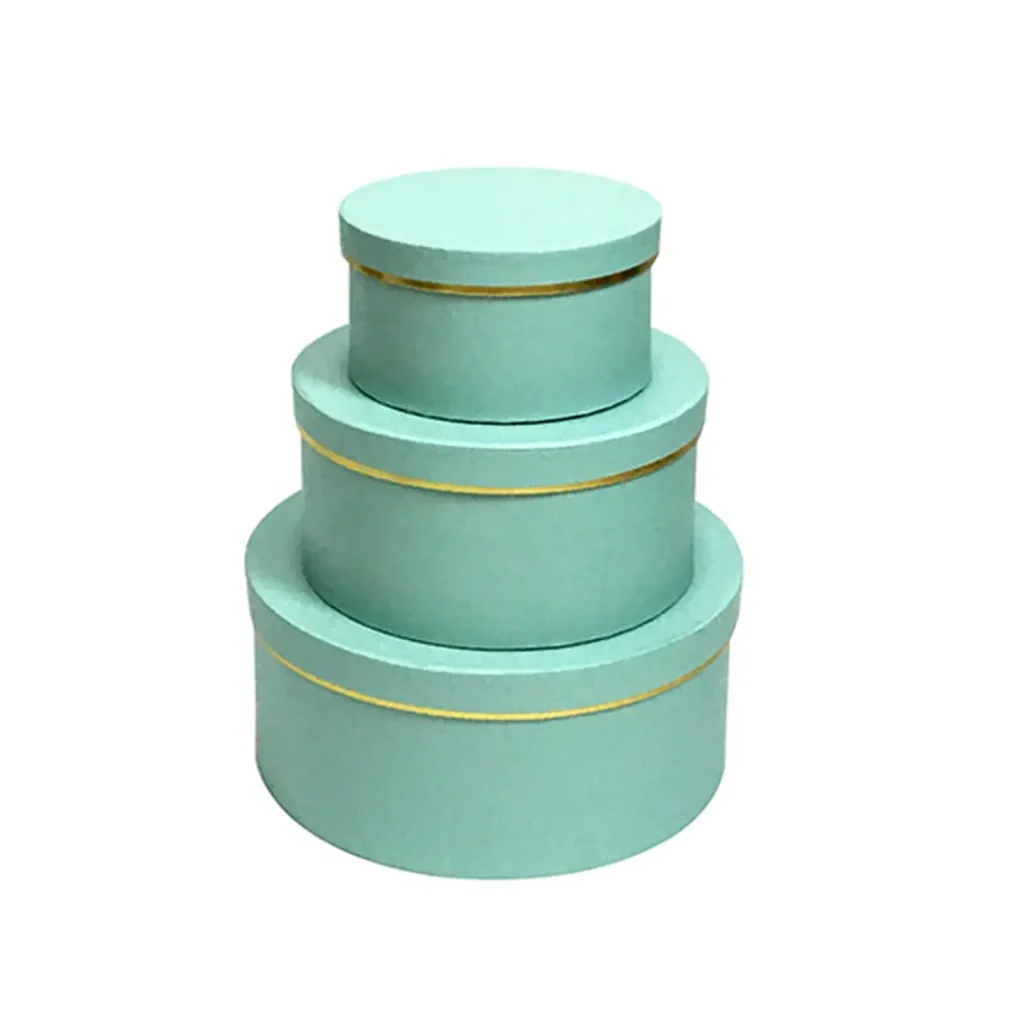
 Conception de boîtes pliantes sur mesureEmballage en carton pour soins de la peau Emballage en carton pour cosmétiques Emballage en papier pour alcool Alimentaire Cannabis Emballage créatif pour cosmétiquesLa boîte à cosmétiques en carton pliable est une option concrète dans le cadre de l'emballage pliable personnalisé...Voir le produitBoîte d'emballageEmballage en boîte rondeExaminez l'emballage en boîte ronde en tant qu'option concrète au sein de l'emballage en boîte et comparez la finition, le format et la commande en fonction de votre cahier des charges.Voir le produit
 Étiquettes et emballagesImpression personnalisée Film d'emballage de savon avec papier d'emballage pliant en cire pour savonLe film d'emballage pour savon avec papier pliant à la cire est une option concrète dans le domaine des étiquettes et de l'emballage et compare les finitions,...Voir le produit
Options connectées
Options commerciales liées à ce guide
Grâce à ces options, le guide reste lié aux catégories de produits connexes et aux choix commerciaux fondamentaux que les acheteurs examinent généralement avant de se renseigner.
Common Questions Before Ordering
Quand l'emballage en boîte ronde est-il le bon choix ?
C'est un choix judicieux lorsque la présentation est importante et que le produit bénéficie d'une forme cylindrique plus distinctive qu'une boîte standard carrée ou rectangulaire.
Les boîtes rondes sont-elles plus complexes à produire ?
Ils peuvent l'être, car la structure, l'emballage, l'ajustement et le conditionnement nécessitent une planification plus réfléchie que les formats de carton plus simples.
Quels sont les produits qui conviennent le mieux aux emballages ronds ?
Les articles-cadeaux, les bougies, les collections de produits de beauté, les thés, les produits alimentaires de qualité supérieure et les lancements d'éditions limitées en sont des exemples courants.
Guides d'achat
Plus de guides d'achat dans la même famille de produits
Continuez à comparer les spécifications, les détails d'approbation et les choix de produits adjacents avec ces ressources connexes.
Boîtes d'emballage sur mesure
Prêt à transformer le dossier en une prochaine étape pratique ?
Partagez les principales dimensions, la quantité, l'état de la maquette et la destination de livraison et HKKAYU pourra revoir le travail en gardant à l'esprit la réalité de la production.
Ce qui aide généralement en premier lieu
Envoyer un briefing de départ à un nettoyeur
- Structure du panneau, sens de la finition et exigences en matière d'insertion.
- Méthode d'emballage, conditions de transit et objectifs de présentation en rayon.
- L'état de préparation de l'œuvre, la bande de quantité et la destination d'expédition.
Questions des lecteurs
Questions Readers Ask About How to Choose Round Box Packaging
This guide is designed to clarify the decisions behind How to Choose Round Box Packaging and make the next commercial step more straightforward.
What does this guide explain about How to Choose Round Box Packaging?
How to choose round box packaging usually works best when the brief starts with operating conditions instead of a visual mockup. For brand owners, sourcing teams and product.
Who should read this guide on How to Choose Round Box Packaging?
This content is most useful for brand teams, sourcing teams and packaging buyers who want practical context before ordering. It helps turn a broad topic into clearer comparisons that can support sourcing, brand review and production planning.
What should readers compare after going through this guide on How to Choose Round Box Packaging?
Les lecteurs repartent généralement avec une meilleure idée de la façon de comparer la structure, les performances en matière de protection, la qualité de la finition, la résistance à l'expédition et la façon dont l'emballage soutient la présentation de la marque. Il est ainsi plus facile de déterminer quels détails des spécifications sont les plus importants avant l'établissement du prix ou l'examen de la maquette.
How can readers turn this guide into a stronger brief for How to Choose Round Box Packaging?
Une étape suivante plus solide commence généralement par les dimensions, la quantité, le style structurel, la préférence en matière de panneaux, le sens de la finition, l'état de la maquette et la destination d'expédition. Ces détails aident le fournisseur à répondre en donnant des indications plus utiles au lieu de formuler des hypothèses génériques.
What should happen after reading about How to Choose Round Box Packaging?
Once the main comparisons are clear, the next move is to gather reference samples, dimensions, artwork direction and quantity plans, then request guidance on the most suitable production setup for How to Choose Round Box Packaging.
