




















Verpakkingsdozen op maat
Product Manual Afdrukken Artwork, Regelgeving en Productie Checklist
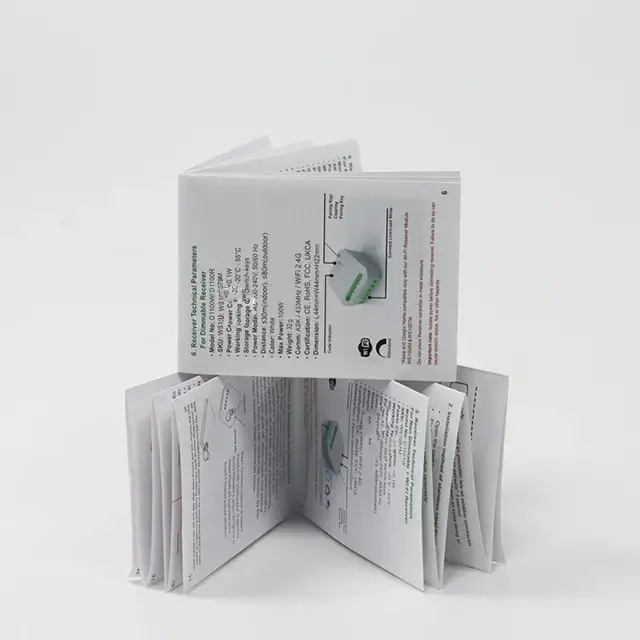
mrt
Custom Packaging Boxes • B2B compliance guide
Product Manual Printing Artwork, Regulatory and Production Checklist
Product manual printing artwork checklist is strongest when the missing technical details are settled early. For brand owners, sourcing teams and product launch managers, that means using the checklist to confirm board strength, inserts, finish direction and transit protection before approval rounds…

Table of contents
Jump to the section you need
B2B reading focus
What a buyer, procurement lead or project owner should confirm
- Check specification completeness, approval ownership and compliance details before sampling starts.
- Confirm how artwork, variable data, batch details and print tolerances will be controlled across repeat orders.
- Match lead time, shipping market and adjacent pack components before the brief is treated as quote-ready.
Product Manual Printing Artwork Checklist: artwork, regulatory copy and production details to lock down early
The practical value of Product manual printing artwork checklist usually comes from settling board strength, inserts, finish direction and transit protection before the project reaches sampling, approval and final production planning for brand owners, sourcing teams and product launch managers.
That kind of discipline is especially useful for teams that manage packaging across several stakeholders. Designers may focus on appearance, procurement may focus on timing and cost, and compliance reviewers may focus on required content or traceability. A checklist keeps those priorities visible at the same time instead of allowing the project to move forward with unresolved contradictions.
Artwork and file setup checkpoints
Artwork and file setup deserve more attention than many buyers expect. The layout should make room for the real production needs of the job, whether that involves ingredient text space, lot and expiry areas, barcode placement, and leaflet integration, structural tolerances or specific inspection or readability rules. That does not mean the design has to become cluttered. It means the file should be built so the intended hierarchy survives real manufacturing conditions. Clean approvals at this stage reduce proofing delays and make supplier communication much more precise.
When a project includes ingredient text space, lot and expiry areas, barcode placement, and leaflet integration, the file should be structured so those elements remain clear after finishing, scaling and production tolerances are considered. That may sound obvious, but it is one of the easiest areas to overlook when a team is moving quickly. Cleaner file setup at the beginning usually leads to cleaner approvals later.
Material, finish and performance checks
Material and finish choices should then be checked against how the piece will actually be used. The same category label can cover very different real-world situations, which is why factors such as protection level, display impact, shipping efficiency, and fill-line compatibility should be reviewed in writing. When SBS board, FBB board, rigid board, and corrugated inserts and matte or gloss lamination, soft-touch film, foil stamping, and debossing are treated as interchangeable, production risk increases. A disciplined checklist forces the team to confirm what really matters instead of assuming that any standard stock will be acceptable.
These checks become even more important when the specification must satisfy demanding conditions such as protection level, display impact, shipping efficiency, and fill-line compatibility. A material that appears acceptable at a glance may become problematic once it meets the real surface, the real handling pattern or the real packing method. The checklist protects the project by making those assumptions visible before they turn into defects.
Supplier questions worth asking early
Supplier screening is not only about price or headline capability. A stronger checklist also asks how the supplier handles sampling, approval, tolerances, variable information, export packing and any special considerations tied to product manual printing. Working directly with a Shenzhen manufacturing team can shorten the path between artwork decisions and production reality. The more explicitly these points are handled, the easier it becomes to decide whether the supplier is quoting the real brief or a simplified version that may change later.
For buyers screening suppliers, this stage also reveals how seriously the production side treats risk. Suppliers that can explain how they handle materials, approvals, data and tolerance questions usually inspire more confidence than those that respond only in broad claims. In practice, that clarity often predicts how the project will behave once the schedule becomes more demanding.
Approval steps before mass production
Approval and rollout should be treated as separate steps, even when the schedule is tight. Before mass production begins, the team should confirm dimensions, materials, finish direction, file version, coding or data logic, and any other point that would be difficult to reverse later. This step is especially valuable for buyers trying to avoid small text becoming unreadable, multi-language layout pressure, manuals not fitting box dimensions, and disconnect between carton and insert production. A measured approval process is not bureaucracy for its own sake; it is often the simplest way to protect timing and budget.
Approval discipline is often what prevents a small error from reaching a large production run. When the team checks artwork version, material choice, coding logic and finish direction in a controlled way, the chance of rework drops sharply. That protects both the schedule and the budget while reducing the kind of confusion that creates small text becoming unreadable, multi-language layout pressure, manuals not fitting box dimensions, and disconnect between carton and insert production.
Turning the checklist into a stronger project brief
A useful checklist ends with a practical outcome: a clearer brief, a more reliable supplier conversation and a reduced chance of avoidable production errors. For product manual printing, that is what helps teams move toward clearer instruction delivery, better coordination with packaging, more efficient version control, and improved insert fit and folding logic. The strongest projects are not the ones with the most paperwork. They are the ones where every essential decision has been made clearly enough that production can start without guesswork.
A well-used checklist is not extra paperwork layered onto the job; it is the shortest route to a dependable brief. Once the essential questions have been answered clearly, the production team can focus on execution rather than interpretation, and the buyer has a stronger basis for expecting clearer instruction delivery, better coordination with packaging, more efficient version control, and improved insert fit and folding logic from the finished order.
How teams use the checklist without slowing the project down
A checklist works best when it is used to answer only the questions that truly protect the project: what the finished item must withstand, what information must be printed accurately, how approval will be documented and what the supplier needs before production starts. That keeps the process efficient while still making sure the important technical details behind product manual printing are settled clearly enough to prevent avoidable rework.
Why checklist discipline matters even on familiar projects
Teams sometimes relax the checklist on repeat jobs because the format feels familiar. That is exactly when hidden problems can slip through, especially if artwork, quantity, destination market or production timing has changed since the last order. For product manual printing, a short confirmation pass protects the project from assuming that last time’s specification still answers this time’s requirements. It is a small habit that often prevents avoidable rework and keeps the rollout steadier under real deadlines.
What changes when the project needs to be repeated
Many buying decisions feel easier when the team looks beyond the first run. The best specification is not only the one that solves today’s problem; it is the one that can still be produced consistently when quantities change, new SKUs are added or another market version is introduced. For product manual printing, repeatability depends on clear artwork control, stable material choices, realistic finishing expectations and a supplier conversation grounded in actual production requirements. That longer view helps turn a one-time order into a packaging standard that is easier to manage over time.
Practical next step
Readers who have narrowed the direction can use the next conversation with HKKAYU more effectively by sharing dimensions, quantity, artwork status and the conditions the finished piece must handle. For product manual printing, a supplier discussion becomes far more productive once the non-negotiable details are clear. That is the point where the project can move from general research into a brief that is specific enough to quote, sample and produce with confidence. A better brief not only improves the first order; it also makes repeat ordering much simpler once the project begins to scale. It also gives internal stakeholders a clearer basis for sign-off before materials, artwork and timing are committed. That combination of clarity, repeatability and easier approval is usually what turns research into a project that can be executed with confidence.
Relevant products
Products this guide helps explain
Use these product options to move from research into real formats, structures and component options linked to the guide.
 Luxe productverpakkingenLuxury White Perfume Cosmetic Set Packaging Box Custom Luxury Perfume Box With Ribbon Logo Rigid Box For Skin cream ProductReview Luxury White Perfume Cosmetic Set Packaging Box Custom Luxury Perfume Box With Ribbon Logo Rigid Box For Skin cream Product as a concrete…Bekijk product
 Aangepaste vouwen kartons ontwerpCustom Skin Care Box Cosmetic Carton Folding Packaging Alcohol Food Cannabis Creative Cosmetic Paper Box PackagingReview Custom Skin Care Box Cosmetic Carton Folding Packaging Alcohol Food Cannabis Creative Cosmetic Paper Box Packaging as a concrete option within Custom Folding…Bekijk product
 Etiketten en verpakkingencustomized printing Soap Packaging Film with wax folding wrapper paper for soapReview customized printing Soap Packaging Film with wax folding wrapper paper for soap as a concrete option within Labels And Packaging and compare finish,…Bekijk product
 VerpakkingsdoosGoedkope Factory Price Design Groothandel kleine zakelijke vakken aangepaste geneeskunde Logo papier doos verpakking afdrukkenBespreking Goedkope Fabriek Prijs Ontwerp Groothandel Kleine Bedrijfsdozen Aangepaste Geneeskunde Logo papieren doos verpakking afdrukken als een concrete optie binnen Verpakkende Doos en...Bekijk product
Connected options
Commercial options linked to this guide
These connected options keep the guide tied to the related product categories and core commercial choices buyers usually review before they inquire.
Frequently Asked Questions
What types of product manuals can be printed?
Product manuals can range from simple folded inserts to multi-page booklets, depending on the amount of information, language count and packaging size.
Should manuals be ordered with the box?
That is often a smart choice because the insert size, fold style and final pack dimensions are closely related.
How can multi-language manuals stay readable?
Clear layout hierarchy, careful fold planning and disciplined copy structure matter much more than simply shrinking the type.
Buyer guides
More buyer guides in the same product family
Continue comparing specifications, approval details and adjacent product choices with these related resources.
Verpakkingsdozen op maat
Ready to turn the brief into a practical next step?
Share the main dimensions, quantity, artwork status and delivery destination and HKKAYU can review the job with production reality in mind.
Wat helpt meestal als eerste
Send a cleaner starting brief
- Board structure, finish direction and insert requirements.
- Packing method, transit conditions and shelf presentation goals.
- Artwork readiness, quantity band and shipping destination.
