




















ฉลากและสติกเกอร์สั่งทำพิเศษ
How to Choose Custom Labels & Stickers That Survive Water, Oil and Shipping
มี.ค.
Custom Labels & Stickers • B2B buying guide
How to Choose Custom Labels & Stickers That Survive Water, Oil and Shipping
How to choose custom labels and stickers usually works best when the brief starts with operating conditions instead of a visual mockup. For brand owners, packaging buyers and product marketers, that makes surface type, adhesive choice, print finish and line-speed application easier…

สารบัญ
กระโดดไปยังส่วนที่คุณต้องการ
- วัสดุและตัวเลือกการตกแต่งที่สำคัญที่สุด
- การจัดการ การเก็บรักษา และการใช้งานที่เปลี่ยนแปลงการตัดสินใจ
- ข้อผิดพลาดที่ก่อให้เกิดปัญหาการผลิตที่สามารถหลีกเลี่ยงได้
- สิ่งที่สรุปเกี่ยวกับซัพพลายเออร์ที่ดีกว่ามักจะประกอบด้วย
- วิธีการก้าวไปสู่การตัดสินใจขั้นสุดท้ายอย่างมั่นใจ
- ทำไมผู้ซื้อครั้งแรกและผู้ซื้อซ้ำถึงถามคำถามที่แตกต่างกัน
จุดเน้นการอ่านสำหรับธุรกิจกับธุรกิจ
สิ่งที่ผู้ซื้อ ผู้นำการจัดซื้อ หรือเจ้าของโครงการควรยืนยัน
- ตรวจสอบว่าคำแนะนำส่งผลต่อความชัดเจนของข้อกำหนด, กระบวนการอนุมัติ และความสม่ำเสมอของการสั่งซื้อซ้ำอย่างไร.
- ใช้บทความนี้เป็นตัวช่วยในการซื้อ ไม่ใช่เพียงแค่เป็นข้อมูลอ้างอิงด้านการออกแบบเท่านั้น: การจัดซื้อ ระยะเวลาดำเนินการ และการควบคุมการผลิตล้วนมีความสำคัญ.
- ยืนยันขั้นตอนถัดไปให้สอดคล้องกับระยะเวลาทางการค้า ตลาดปลายทาง และข้อกำหนดบรรจุภัณฑ์โดยรวม.
How To Choose Custom Labels And Stickers: the checks that matter before materials and finishes are approved
The practical value of How to choose custom labels and stickers usually comes from settling surface type, adhesive choice, print finish and line-speed application before the project reaches sampling, approval and final production planning for brand owners, packaging buyers and product marketers.
How To Choose Custom Labels And Stickers: what buyers usually confirm next
How to choose custom labels and stickers works best when the brief connects the product requirement to materials, finish direction, artwork status and approval timing before quotation begins.
- Match How to choose custom labels and stickers to the material and finish route that fits the real product environment.
- ยืนยันความพร้อมของงานศิลป์ ข้อความตามข้อกำหนดทางกฎหมาย และกำหนดเวลาการอนุมัติก่อนทำการจองการผลิต.
- Prepare quantity bands, sampling needs and shipping details before pricing How to choose custom labels and stickers.
For brand owners, packaging buyers, private-label manufacturers, and product launch teams, this early definition step prevents the project from drifting into generic assumptions. A packaging format that works well for one surface or one distribution route may struggle badly in another. When the team describes the intended application clearly—whether that means bottles, jars, pouches, and cartons—it becomes possible to test the idea against real-world friction rather than marketing language. That is usually the first sign that a brief is mature enough to quote properly.
วัสดุและตัวเลือกการตกแต่งที่สำคัญที่สุด
Material choice matters because it influences durability, print appearance and the way the finished piece behaves in production. For custom labels and stickers, common options may include coated paper, BOPP, PP, and PET. Each route changes the balance between cost, tactile feel, resistance and visual effect. Finish choices such as matte lamination, gloss lamination, spot UV, and foil stamping can then add another layer of differentiation, but they should be selected to support the real goal rather than simply to make the sample look more elaborate. A premium finish is only useful when it still suits the environment the product will face after printing.
Another helpful question is whether the project needs a finish-led solution or a performance-led one. Buyers sometimes begin with a visual target, then adjust once they see how coated paper, BOPP, PP, and PET and finishes such as matte lamination, gloss lamination, spot UV, and foil stamping behave under real handling conditions. That shift is healthy. It usually leads to a specification that looks right and remains workable once the project moves into full production.
การจัดการ การเก็บรักษา และการใช้งานที่เปลี่ยนแปลงการตัดสินใจ
Buyers sometimes assume that a good-looking sample will automatically perform well on every surface. In practice, the packaging surface, curvature, storage conditions and handling pattern all change what makes sense. This is especially true for custom labels and stickers because the wrong construction can lead to issues such as labels that scuff in transit, poor adhesion on curved packaging, inconsistent colors between batches, and slow application on packing lines. A more dependable route is to match the specification to the actual use case rather than to a generic category label. The more precisely the real environment is described, the easier it becomes to narrow the right construction before production begins.
This is also where sampling or controlled pre-production checks become valuable. If a buyer already knows the project has to survive surface energy, moisture exposure, oil contact, and temperature swings, then small material tests or more detailed supplier feedback can reveal weak points before the full order is exposed to them. A little discipline here is often far cheaper than correcting a preventable failure after shipment.
ข้อผิดพลาดที่ก่อให้เกิดปัญหาการผลิตที่สามารถหลีกเลี่ยงได้
One of the most common mistakes is treating artwork, material and production as separate conversations. They are connected. Layout decisions influence readability, finishing choices affect how details reproduce, and any room needed for barcode readability, ingredient or usage text, batch coding, and shipping durability can change the final format significantly. Buyers who coordinate these points earlier usually spend less time correcting files and less money on preventable revisions. The goal is not to build complexity for its own sake; it is to make sure the designed result can be manufactured consistently.
That coordination matters because avoidable problems often appear as small inconsistencies at first. A file that looked acceptable on screen may print less clearly than expected, or a finish selected for appearance may increase the risk of labels that scuff in transit, poor adhesion on curved packaging, inconsistent colors between batches, and slow application on packing lines. Buyers who treat design and manufacturing as one conversation usually protect both quality and schedule much more effectively.
สิ่งที่สรุปเกี่ยวกับซัพพลายเออร์ที่ดีกว่ามักจะประกอบด้วย
A strong supplier brief should give enough information to compare options sensibly. For custom labels and stickers, that means confirming size, quantity, artwork status, application method, finish expectations and the conditions the product will face once packed or displayed. HKKAYU works as a direct manufacturing partner in Shenzhen, which helps buyers discuss materials, finishing and production timing more directly. When a supplier understands the real job instead of only the product name, recommendations become more useful and the quote becomes easier to trust.
การชี้แจงที่ดีไม่จำเป็นต้องซับซ้อน เพียงแค่ต้องบอกให้ผู้จัดหาทราบว่าความสำเร็จมีลักษณะอย่างไร เมื่อการชี้แจงอธิบายสภาพแวดล้อมของผลิตภัณฑ์ ข้อมูลสำคัญที่เป็นอุปสรรค และผลลัพธ์ด้านประสิทธิภาพที่สำคัญที่สุด ผู้จัดหาจะให้ความเห็นที่เกี่ยวข้องมากขึ้น นั่นคือจุดที่ตัวเลือกต่างๆ เริ่มชัดเจนขึ้นแทนที่จะสับสนมากขึ้น.
วิธีการก้าวไปสู่การตัดสินใจขั้นสุดท้ายอย่างมั่นใจ
The best decisions on custom labels and stickers usually come from eliminating uncertainty rather than adding more options. Buyers who define the performance need, choose materials and finishes with intention and align the artwork with the production method are far more likely to reach clean brand presentation, better line efficiency, more durable packaging, and a tighter print specification before ordering. Whether the project is a first launch or a repeat order, a disciplined brief gives the production team something practical to build from and gives the buyer a stronger chance of approving the first result with confidence.
In other words, the best buying decision is usually the one that reduces risk while still supporting the brand goal. Once the team knows what must be protected, what can remain flexible and what would make reordering easy later, custom labels & stickers stop feeling like a vague category and start feeling like a manageable specification built around clean brand presentation, better line efficiency, more durable packaging, and a tighter print specification before ordering.
วิธีง่ายๆ ในการเปลี่ยนงานวิจัยให้กลายเป็นโจทย์ที่ชัดเจนและแข็งแกร่งยิ่งขึ้น
For brand owners, packaging buyers, private-label manufacturers, and product launch teams, the most useful next move is to convert what they have learned into a short written brief. That brief should confirm the exact format, the use environment, the performance risks tied to surface energy, moisture exposure, oil contact, temperature swings, and application speed, the finish direction and the approval points that cannot be skipped. Once those items are written down, supplier advice becomes easier to evaluate because every recommendation can be tested against the same real-world target instead of against a vague idea.
ทำไมผู้ซื้อครั้งแรกและผู้ซื้อซ้ำถึงถามคำถามที่แตกต่างกัน
First-time buyers often focus on discovering the right format, while repeat buyers are more concerned with consistency, timing and how easily the approved specification can be reordered. Both perspectives are useful. For custom labels and stickers, the strongest decision usually borrows from both: it asks whether the route is suitable now and whether it will still make sense when quantities, markets or SKU counts expand. That broader view helps keep early choices aligned with longer-term packaging discipline.
อะไรที่เปลี่ยนแปลงเมื่อโครงการต้องทำซ้ำ
Many buying decisions feel easier when the team looks beyond the first run. The best specification is not only the one that solves today’s problem; it is the one that can still be produced consistently when quantities change, new SKUs are added or another market version is introduced. For custom labels and stickers, repeatability depends on clear artwork control, stable material choices, realistic finishing expectations and a supplier conversation grounded in actual production requirements. That longer view helps turn a one-time order into a packaging standard that is easier to manage over time.
ขั้นตอนต่อไปที่สามารถทำได้จริง
Readers who have narrowed the direction can use the next conversation with HKKAYU more effectively by sharing dimensions, quantity, artwork status and the conditions the finished piece must handle. For custom labels and stickers, a supplier discussion becomes far more productive once the non-negotiable details are clear. That is the point where the project can move from general research into a brief that is specific enough to quote, sample and produce with confidence. A better brief not only improves the first order; it also makes repeat ordering much simpler once the project begins to scale. It also gives internal stakeholders a clearer basis for sign-off before materials, artwork and timing are committed. That combination of clarity, repeatability and easier approval is usually what turns research into a project that can be executed with confidence.
ผลิตภัณฑ์ที่เกี่ยวข้อง
ผลิตภัณฑ์ที่คู่มือนี้ช่วยอธิบาย
ใช้ตัวเลือกผลิตภัณฑ์เหล่านี้เพื่อเปลี่ยนจากการวิจัยไปสู่รูปแบบ โครงสร้าง และตัวเลือกส่วนประกอบจริงที่เชื่อมโยงกับคู่มือ.
 ฉลากและสติกเกอร์สติ๊กเกอร์ปั๊มนูนทบทวนสติ๊กเกอร์ปั๊มนูนเป็นทางเลือกที่เป็นรูปธรรมภายในหมวดฉลากและสติ๊กเกอร์ และเปรียบเทียบการตกแต่ง รูปแบบ และความเหมาะสมในการสั่งซื้อให้ตรงกับข้อกำหนดของคุณ.ดูสินค้า
 ฉลากและสติกเกอร์บริการพิมพ์สติ๊กเกอร์รถยนต์ตามสั่ง แผ่นป้ายทะเบียนชั่วคราว สติ๊กเกอร์ป้องกันชั่วคราว สติ๊กเกอร์ลาย 3 มิติแบบถ่ายโอน สติ๊กเกอร์แม่เหล็กสำหรับใช้งานกลางแจ้ง ฉลากโลหะเคลือบยูวีโพลีเอสเตอร์พีวีซีไวนิลตรวจสอบการพิมพ์สติ๊กเกอร์รถยนต์แบบกำหนดเอง แผ่นป้ายทะเบียนชั่วคราว, สัญลักษณ์ป้องกันชั่วคราว, สติ๊กเกอร์ถ่ายโอนแบบ 3D, สติ๊กเกอร์แม่เหล็กสำหรับภายนอก, ฉลากโลหะ UV โพลีเอสเตอร์ PVC ไวนิล...ดูสินค้า
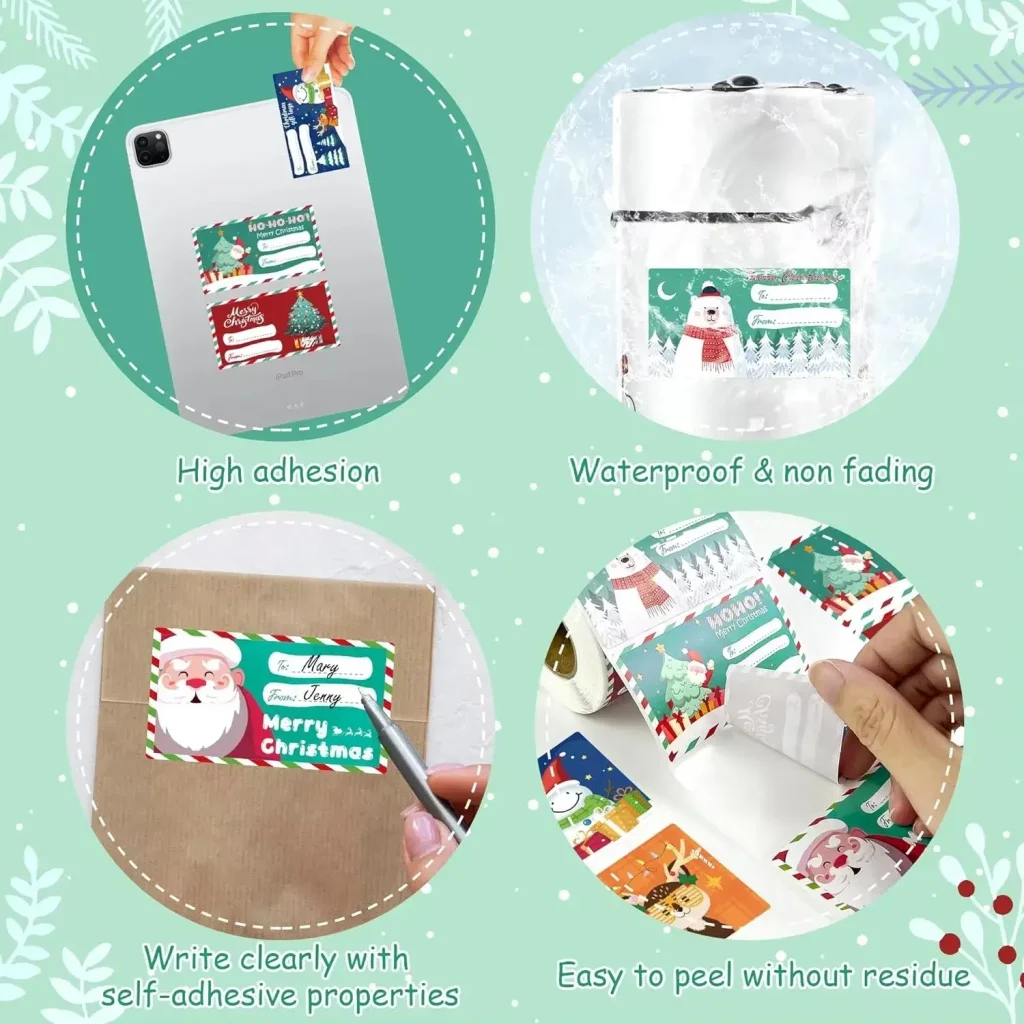 ม้วนฉลากสั่งทำพิเศษสติ๊กเกอร์ฉลากติดบรรจุภัณฑ์ของขวัญพิมพ์ลายสั่งทำพิเศษกันน้ำสำหรับคริสต์มาส จำนวน 500 ชิ้น เหมาะสำหรับของขวัญและตกแต่งในเทศกาลคริสต์มาสรีวิวสติ๊กเกอร์ฉลากแท็กสำหรับบรรจุภัณฑ์ของขวัญพิมพ์ลายสั่งทำพิเศษกันน้ำ 500 ชิ้น สำหรับของขวัญคริสต์มาสและของตกแต่ง เป็นตัวเลือกที่ชัดเจนภายในบริการฉลากสั่งทำ...ดูสินค้า
 ฉลากและสติกเกอร์ราคาโรงงาน สายรัดข้อมือ Tyvek กระดาษ กันน้ำ ชนิดใช้แล้วทิ้ง ติดเอง วัสดุ Tyvek สำหรับงานอีเวนต์รีวิวราคาโรงงาน สายรัดข้อมือ Tyvek วัสดุ Tyvek กันน้ำ ชนิดใช้แล้วทิ้ง มีกาวในตัว สำหรับงานอีเวนต์ เป็นตัวเลือกที่ชัดเจนในกลุ่มป้ายและสติกเกอร์ เปรียบเทียบ...ดูสินค้า
ตัวเลือกที่เชื่อมต่อ
ตัวเลือกเชิงพาณิชย์ที่เชื่อมโยงกับคู่มือนี้
ตัวเลือกที่เชื่อมต่อเหล่านี้ช่วยให้คู่มือเชื่อมโยงกับหมวดหมู่สินค้าที่เกี่ยวข้องและตัวเลือกทางการค้าหลักที่ผู้ซื้อมักตรวจสอบก่อนที่พวกเขาจะสอบถาม.
Frequently Asked Questions
Which label material works best for moisture and oil?
That depends on the surface and the conditions the product faces. Film materials such as BOPP, PP or PET are often chosen when labels need better resistance to splashes, oil or repeated handling, while coated papers can work well for dry goods and presentation-focused projects.
Can HKKAYU help with both printed labels and packaging components?
Yes. The current site presents labels, cigarette packaging and packaging boxes under one manufacturing offer. That can be useful when a product line needs visual consistency across several printed components.
What files are best for production?
Vector artwork, an editable layout file and clear notes on size, quantity, finish and application conditions are ideal. When final artwork is not ready, a draft label layout or reference sample still helps move the project forward.
คู่มือสำหรับผู้ซื้อ
คู่มือสำหรับผู้ซื้อเพิ่มเติมในกลุ่มผลิตภัณฑ์เดียวกัน
โปรดดำเนินการเปรียบเทียบข้อมูลจำเพาะ รายละเอียดการอนุมัติ และตัวเลือกผลิตภัณฑ์ที่อยู่ใกล้เคียงกับทรัพยากรที่เกี่ยวข้องเหล่านี้ต่อไป.
ฉลากและสติกเกอร์สั่งทำพิเศษ
พร้อมที่จะเปลี่ยนแนวคิดให้กลายเป็นขั้นตอนปฏิบัติจริงหรือยัง?
กรุณาแจ้งขนาดหลัก, จำนวน, สถานะของงานศิลป์ และสถานที่จัดส่ง เพื่อให้ HKKAYU สามารถตรวจสอบงานโดยคำนึงถึงความเป็นจริงในการผลิต.
อะไรที่มักจะช่วยได้ก่อน
ส่งเอกสารสรุปงานเริ่มต้นที่ชัดเจน
- พื้นผิว, ทิศทางของกาว และความคาดหวังของผิวสำเร็จ.
- วิธีการใช้งาน, รูปแบบบรรจุภัณฑ์ และช่วงปริมาณ.
- สถานะของงานศิลปะ, ระยะเวลาการอนุมัติ และสถานที่จัดส่ง.
