




















Mukautetut tarrat & tarrat
In-Mold Labels Design Specs, File Setup and Compliance Checklist

maalis
Custom Labels & Stickers • B2B compliance guide
In-Mold Labels Design Specs, File Setup and Compliance Checklist
Projects involving in-mold labels tend to move smoothly when the technical details are settled before the press schedule is locked. Most avoidable delays come from missing information in the artwork, unclear variable-data rules, untested material assumptions or supplier conversations that happen too…
Sisällysluettelo
Siirry haluamaasi osioon
- Tekniset ja sääntöjen noudattamiseen liittyvät ongelmat ilmenevät yleensä
- Taideteosten ja tiedostojen asetusten tarkistuspisteet
- Materiaalin, viimeistelyn ja suorituskyvyn tarkastukset
- Toimittajien kysymykset kannattaa esittää varhaisessa vaiheessa
- Hyväksymisvaiheet ennen massatuotantoa
- Tarkastuslistan muuttaminen vahvemmaksi projektiselvitykseksi
B2B-lukemisen painopiste
Mitä ostajan, hankintapäällikön tai projektin omistajan tulisi vahvistaa?
- Tarkista eritelmien täydellisyys, hyväksynnän omistajuus ja vaatimustenmukaisuuden yksityiskohdat ennen näytteenoton aloittamista.
- Vahvista, miten kuvitusta, muuttuvia tietoja, erän yksityiskohtia ja painotoleransseja valvotaan uusintatilauksissa.
- Sovita yhteen toimitusaika, toimitusmarkkinat ja vierekkäiset pakkauskomponentit, ennen kuin toimeksianto katsotaan tarjousvalmiiksi.
Tekniset ja sääntöjen noudattamiseen liittyvät ongelmat ilmenevät yleensä
Compliance and technical mistakes usually begin at the specification stage. A size is assumed instead of confirmed, a data field is left to the last minute, or the artwork is approved before the material and finish route have been settled. For in-mold labels, those gaps can create costly friction because the finished result has to satisfy both visual and functional expectations. Teams that treat the project checklist seriously tend to catch issues while they are still easy to correct.
Tällainen kurinalaisuus on erityisen hyödyllistä tiimeille, jotka hallinnoivat pakkauksia useiden sidosryhmien kesken. Suunnittelijat saattavat keskittyä ulkonäköön, hankinnat saattavat keskittyä aikatauluun ja kustannuksiin ja vaatimustenmukaisuuden tarkastajat saattavat keskittyä vaadittuun sisältöön tai jäljitettävyyteen. Tarkistuslista pitää nämä prioriteetit näkyvillä samanaikaisesti sen sijaan, että projekti etenisi ratkaisemattomien ristiriitojen kanssa.
Taideteosten ja tiedostojen asetusten tarkistuspisteet
Artwork and file setup deserve more attention than many buyers expect. The layout should make room for the real production needs of the job, whether that involves barcode readability, ingredient or usage text, batch coding, and shipping durability, structural tolerances or specific inspection or readability rules. That does not mean the design has to become cluttered. It means the file should be built so the intended hierarchy survives real manufacturing conditions. Clean approvals at this stage reduce proofing delays and make supplier communication much more precise.
When a project includes barcode readability, ingredient or usage text, batch coding, and shipping durability, the file should be structured so those elements remain clear after finishing, scaling and production tolerances are considered. That may sound obvious, but it is one of the easiest areas to overlook when a team is moving quickly. Cleaner file setup at the beginning usually leads to cleaner approvals later.
Materiaalin, viimeistelyn ja suorituskyvyn tarkastukset
Material and finish choices should then be checked against how the piece will actually be used. The same category label can cover very different real-world situations, which is why factors such as surface energy, moisture exposure, oil contact, and temperature swings should be reviewed in writing. When coated paper, BOPP, PP, and PET and matte lamination, gloss lamination, spot UV, and foil stamping are treated as interchangeable, production risk increases. A disciplined checklist forces the team to confirm what really matters instead of assuming that any standard stock will be acceptable.
These checks become even more important when the specification must satisfy demanding conditions such as surface energy, moisture exposure, oil contact, and temperature swings. A material that appears acceptable at a glance may become problematic once it meets the real surface, the real handling pattern or the real packing method. The checklist protects the project by making those assumptions visible before they turn into defects.
Toimittajien kysymykset kannattaa esittää varhaisessa vaiheessa
Supplier screening is not only about price or headline capability. A stronger checklist also asks how the supplier handles sampling, approval, tolerances, variable information, export packing and any special considerations tied to in-mold labels. HKKAYU works as a direct manufacturing partner in Shenzhen, which helps buyers discuss materials, finishing and production timing more directly. The more explicitly these points are handled, the easier it becomes to decide whether the supplier is quoting the real brief or a simplified version that may change later.
Toimittajia seuloville ostajille tämä vaihe paljastaa myös sen, miten vakavasti tuotantopuolella suhtaudutaan riskeihin. Toimittajat, jotka pystyvät selittämään, miten ne käsittelevät materiaaleja, hyväksyntöjä, tietoja ja toleranssikysymyksiä, herättävät yleensä enemmän luottamusta kuin toimittajat, jotka vastaavat vain laajoihin väitteisiin. Käytännössä tämä selkeys ennustaa usein, miten hanke käyttäytyy, kun aikataulu muuttuu vaativammaksi.
Hyväksymisvaiheet ennen massatuotantoa
Approval and rollout should be treated as separate steps, even when the schedule is tight. Before mass production begins, the team should confirm dimensions, materials, finish direction, file version, coding or data logic, and any other point that would be difficult to reverse later. This step is especially valuable for buyers trying to avoid post-application label labor, labels separating from containers, harsh warehouse use, and complex molding requirements. A measured approval process is not bureaucracy for its own sake; it is often the simplest way to protect timing and budget.
Approval discipline is often what prevents a small error from reaching a large production run. When the team checks artwork version, material choice, coding logic and finish direction in a controlled way, the chance of rework drops sharply. That protects both the schedule and the budget while reducing the kind of confusion that creates post-application label labor, labels separating from containers, harsh warehouse use, and complex molding requirements.
Tarkastuslistan muuttaminen vahvemmaksi projektiselvitykseksi
A useful checklist ends with a practical outcome: a clearer brief, a more reliable supplier conversation and a reduced chance of avoidable production errors. For in-mold labels, that is what helps teams move toward integrated decoration, more durable branding, reduced secondary labeling steps, and cleaner container finish. The strongest projects are not the ones with the most paperwork. They are the ones where every essential decision has been made clearly enough that production can start without guesswork.
A well-used checklist is not extra paperwork layered onto the job; it is the shortest route to a dependable brief. Once the essential questions have been answered clearly, the production team can focus on execution rather than interpretation, and the buyer has a stronger basis for expecting integrated decoration, more durable branding, reduced secondary labeling steps, and cleaner container finish from the finished order.
Miten tiimit käyttävät tarkistuslistaa hidastamatta projektia?
A checklist works best when it is used to answer only the questions that truly protect the project: what the finished item must withstand, what information must be printed accurately, how approval will be documented and what the supplier needs before production starts. That keeps the process efficient while still making sure the important technical details behind in-mold labels are settled clearly enough to prevent avoidable rework.
Miksi tarkistuslistojen kurinalaisuudella on merkitystä jopa tutuissa projekteissa
Teams sometimes relax the checklist on repeat jobs because the format feels familiar. That is exactly when hidden problems can slip through, especially if artwork, quantity, destination market or production timing has changed since the last order. For in-mold labels, a short confirmation pass protects the project from assuming that last time’s specification still answers this time’s requirements. It is a small habit that often prevents avoidable rework and keeps the rollout steadier under real deadlines.
Mikä muuttuu, kun hanke on toistettava
Many buying decisions feel easier when the team looks beyond the first run. The best specification is not only the one that solves today’s problem; it is the one that can still be produced consistently when quantities change, new SKUs are added or another market version is introduced. For in-mold labels, repeatability depends on clear artwork control, stable material choices, realistic finishing expectations and a supplier conversation grounded in actual production requirements. That longer view helps turn a one-time order into a packaging standard that is easier to manage over time.
Seuraava käytännön askel
Readers who have narrowed the direction can use the next conversation with HKKAYU more effectively by sharing dimensions, quantity, artwork status and the conditions the finished piece must handle. For in-mold labels, a supplier discussion becomes far more productive once the non-negotiable details are clear. That is the point where the project can move from general research into a brief that is specific enough to quote, sample and produce with confidence. A better brief not only improves the first order; it also makes repeat ordering much simpler once the project begins to scale. It also gives internal stakeholders a clearer basis for sign-off before materials, artwork and timing are committed. That combination of clarity, repeatability and easier approval is usually what turns research into a project that can be executed with confidence.
Next pages to open before requesting a quote
These links keep the supporting guide connected to its main silo, the closest core commercial option and the quote flow.
Asiaankuuluvat tuotteet
Tuotteet, joita tämä opas auttaa selittämään
Käytä näitä tuotevaihtoehtoja siirtyäksesi tutkimuksesta todellisiin muotoihin, rakenteisiin ja komponenttivaihtoehtoihin, jotka liittyvät oppaaseen.
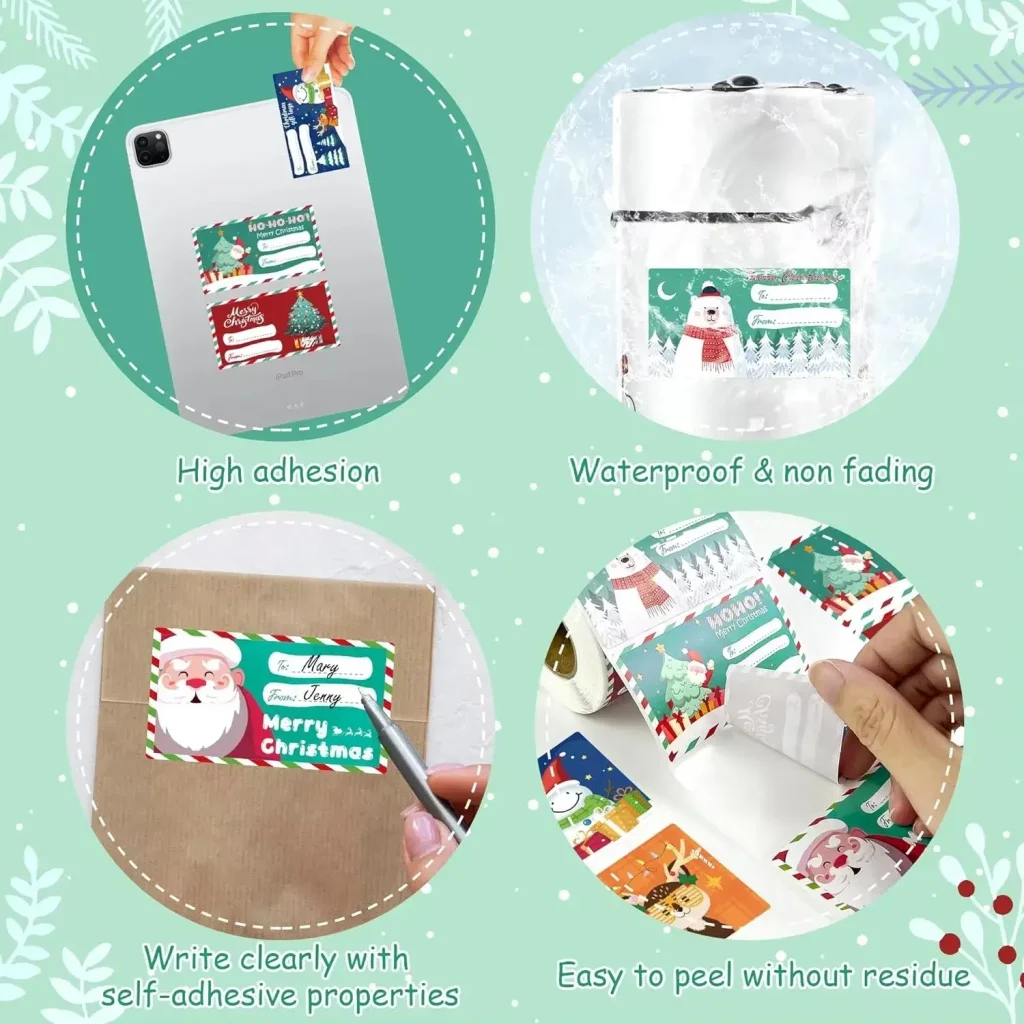 Mukautetut etikettirullatBulk 500PCS joulu vedenpitävä Custom painettu lahja pakkaus pakkaus tarra tarra tag joululahjat koristeetReview Bulk 500PCS joulu vedenpitävä Custom painettu lahja Wrapping pakkaus Tarra Label Tag joululahjat koristeet kuin konkreettinen vaihtoehto sisällä Custom Label...Näytä tuote
 Tarrat ja tarratKohokuvioitu tarratTarkista kohokuvioidut tarrat konkreettisena vaihtoehtona tarroissa ja tarroissa ja vertaa viimeistelyä, muotoa ja tilausta, jotka sopivat toimeksiantoosi.Näytä tuote
 Tarrat ja tarratCustom Car Tarra tulostus tilapäinen rekisterikilpi, tilapäinen Protector Mark, 3D Transfer tarrat, Outdoor Magneettinen Paste tarrat, Metal UV Polyesteri PVC Vinyl TarratArvostelu Custom Car Tarra Tulostus Väliaikainen rekisterikilpi, Väliaikainen Protector Mark, 3D Transfer tarrat, Outdoor Magnetic Paste Tarrat, Metal UV Polyesteri PVC Vinyl Tarrat...Näytä tuoteTarrat ja tarratVedenpitävä Custom Pvc Moottoriöljy ihonhoito In-Mold Label Kemiallinen IML Vinyl Tarrat Puhdistusaineet Food Bottle LabelsArvostelu Vedenpitävä Custom Pvc Moottoriöljy ihonhoito In-Mold Label Kemiallinen IML Vinyl Tarrat Puhdistusaineet Food Bottle Labels konkreettisena vaihtoehtona sisällä Labels...Näytä tuote
Liitetyt vaihtoehdot
Tähän oppaaseen liittyvät kaupalliset vaihtoehdot
Nämä yhdistetyt vaihtoehdot pitävät oppaan sidottuna toisiinsa liittyviin tuoteryhmiin ja keskeisiin kaupallisiin valintoihin, joita ostajat yleensä tarkastelevat ennen kyselyä.
Ostajien usein esittämät kysymykset
What makes in-mold labels different?
In-mold labels are applied during the molding process rather than after the container is made. That creates a more integrated result and can reduce the need for a separate labeling step.
When are in-mold labels a good fit?
They are often chosen for rigid containers, tubs, buckets and other molded packaging where durability, washability or a fully integrated look matters.
Do in-mold labels require special production planning?
Yes. Mold process, material compatibility, label thickness and artwork position all need to align with the molding method for the result to be reliable.
Ostajan oppaat
Lisää ostajan oppaita samasta tuoteperheestä
Jatka erittelyjen, hyväksyntätietojen ja vierekkäisten tuotevalintojen vertailua näillä aiheeseen liittyvillä resursseilla.
Mukautetut tarrat & tarrat
Oletko valmis muuttamaan toimeksiannon käytännölliseksi seuraavaksi askeleeksi?
Jaa tärkeimmät mitat, määrä, taideteoksen tila ja toimituspaikka, niin HKKAYU voi tarkastella työtä tuotantotodellisuutta silmällä pitäen.
Mikä yleensä auttaa ensin
Lähetä siivoojalle aloitusvaltuutus
- Pinta, liimaussuunta ja viimeistelyodotus.
- Soveltamismenetelmä, pakkausmuoto ja määräalue.
- Taideteoksen tila, hyväksymisaikataulu ja toimituspaikka.
Lukijan kysymykset
Questions Readers Ask About In-mold Labels Design Specs
This guide is designed to clarify the decisions behind In-mold Labels Design Specs and make the next commercial step more straightforward.
Which points does this guide cover around In-mold Labels Design Specs?
Use Case / ComplianceIn-Mold Labels Design Specs, File Setup and Compliance ChecklistProjects involving in-mold labels tend to move smoothly when the technical details are settled before the press.
Who should read this guide on In-mold Labels Design Specs?
Tämä sisältö on hyödyllisin bränditiimeille, hankintatiimeille ja pakkausten ostajille, jotka haluavat käytännönläheistä tietoa ennen tilaamista. Se auttaa muuttamaan laajan aiheen selkeämmiksi vertailuiksi, jotka voivat tukea hankintaa, tuotemerkkien tarkastelua ja tuotannon suunnittelua.
How can this guide support decision-making around In-mold Labels Design Specs?
Readers usually leave with a better sense of how to compare adhesion, print sharpness, finish feel, application speed and long-term appearance on the target surface. That makes it easier to judge which specification details matter most before pricing or artwork review.
What details should be prepared before requesting pricing for In-mold Labels Design Specs?
A stronger next step usually starts with size, quantity, application surface, adhesive needs, finish preference, artwork status and delivery details. Those details help the supplier answer with more useful guidance instead of generic assumptions.
What is the practical next step once In-mold Labels Design Specs is understood?
Once the main comparisons are clear, the next move is to gather reference samples, dimensions, artwork direction and quantity plans, then request guidance on the most suitable production setup for In-mold Labels Design Specs.
