




















Nhãn và miếng dán tùy chỉnh
In-Mold Labels Design Specs, File Setup and Compliance Checklist

Tháng 3
Custom Labels & Stickers • B2B compliance guide
In-Mold Labels Design Specs, File Setup and Compliance Checklist
Projects involving in-mold labels tend to move smoothly when the technical details are settled before the press schedule is locked. Most avoidable delays come from missing information in the artwork, unclear variable-data rules, untested material assumptions or supplier conversations that happen too…
Mục lục
Chuyển đến phần bạn cần
Trọng tâm đọc B2B
Những điều mà người mua, trưởng bộ phận mua sắm hoặc chủ dự án cần xác nhận
- Check specification completeness, approval ownership and compliance details before sampling starts.
- Confirm how artwork, variable data, batch details and print tolerances will be controlled across repeat orders.
- Match lead time, shipping market and adjacent pack components before the brief is treated as quote-ready.
Where technical and compliance issues usually appear
Compliance and technical mistakes usually begin at the specification stage. A size is assumed instead of confirmed, a data field is left to the last minute, or the artwork is approved before the material and finish route have been settled. For in-mold labels, those gaps can create costly friction because the finished result has to satisfy both visual and functional expectations. Teams that treat the project checklist seriously tend to catch issues while they are still easy to correct.
That kind of discipline is especially useful for teams that manage packaging across several stakeholders. Designers may focus on appearance, procurement may focus on timing and cost, and compliance reviewers may focus on required content or traceability. A checklist keeps those priorities visible at the same time instead of allowing the project to move forward with unresolved contradictions.
Artwork and file setup checkpoints
Artwork and file setup deserve more attention than many buyers expect. The layout should make room for the real production needs of the job, whether that involves barcode readability, ingredient or usage text, batch coding, and shipping durability, structural tolerances or specific inspection or readability rules. That does not mean the design has to become cluttered. It means the file should be built so the intended hierarchy survives real manufacturing conditions. Clean approvals at this stage reduce proofing delays and make supplier communication much more precise.
When a project includes barcode readability, ingredient or usage text, batch coding, and shipping durability, the file should be structured so those elements remain clear after finishing, scaling and production tolerances are considered. That may sound obvious, but it is one of the easiest areas to overlook when a team is moving quickly. Cleaner file setup at the beginning usually leads to cleaner approvals later.
Material, finish and performance checks
Material and finish choices should then be checked against how the piece will actually be used. The same category label can cover very different real-world situations, which is why factors such as surface energy, moisture exposure, oil contact, and temperature swings should be reviewed in writing. When coated paper, BOPP, PP, and PET and matte lamination, gloss lamination, spot UV, and foil stamping are treated as interchangeable, production risk increases. A disciplined checklist forces the team to confirm what really matters instead of assuming that any standard stock will be acceptable.
These checks become even more important when the specification must satisfy demanding conditions such as surface energy, moisture exposure, oil contact, and temperature swings. A material that appears acceptable at a glance may become problematic once it meets the real surface, the real handling pattern or the real packing method. The checklist protects the project by making those assumptions visible before they turn into defects.
Supplier questions worth asking early
Supplier screening is not only about price or headline capability. A stronger checklist also asks how the supplier handles sampling, approval, tolerances, variable information, export packing and any special considerations tied to in-mold labels. HKKAYU works as a direct manufacturing partner in Shenzhen, which helps buyers discuss materials, finishing and production timing more directly. The more explicitly these points are handled, the easier it becomes to decide whether the supplier is quoting the real brief or a simplified version that may change later.
For buyers screening suppliers, this stage also reveals how seriously the production side treats risk. Suppliers that can explain how they handle materials, approvals, data and tolerance questions usually inspire more confidence than those that respond only in broad claims. In practice, that clarity often predicts how the project will behave once the schedule becomes more demanding.
Approval steps before mass production
Approval and rollout should be treated as separate steps, even when the schedule is tight. Before mass production begins, the team should confirm dimensions, materials, finish direction, file version, coding or data logic, and any other point that would be difficult to reverse later. This step is especially valuable for buyers trying to avoid post-application label labor, labels separating from containers, harsh warehouse use, and complex molding requirements. A measured approval process is not bureaucracy for its own sake; it is often the simplest way to protect timing and budget.
Approval discipline is often what prevents a small error from reaching a large production run. When the team checks artwork version, material choice, coding logic and finish direction in a controlled way, the chance of rework drops sharply. That protects both the schedule and the budget while reducing the kind of confusion that creates post-application label labor, labels separating from containers, harsh warehouse use, and complex molding requirements.
Turning the checklist into a stronger project brief
A useful checklist ends with a practical outcome: a clearer brief, a more reliable supplier conversation and a reduced chance of avoidable production errors. For in-mold labels, that is what helps teams move toward integrated decoration, more durable branding, reduced secondary labeling steps, and cleaner container finish. The strongest projects are not the ones with the most paperwork. They are the ones where every essential decision has been made clearly enough that production can start without guesswork.
A well-used checklist is not extra paperwork layered onto the job; it is the shortest route to a dependable brief. Once the essential questions have been answered clearly, the production team can focus on execution rather than interpretation, and the buyer has a stronger basis for expecting integrated decoration, more durable branding, reduced secondary labeling steps, and cleaner container finish from the finished order.
How teams use the checklist without slowing the project down
A checklist works best when it is used to answer only the questions that truly protect the project: what the finished item must withstand, what information must be printed accurately, how approval will be documented and what the supplier needs before production starts. That keeps the process efficient while still making sure the important technical details behind in-mold labels are settled clearly enough to prevent avoidable rework.
Why checklist discipline matters even on familiar projects
Teams sometimes relax the checklist on repeat jobs because the format feels familiar. That is exactly when hidden problems can slip through, especially if artwork, quantity, destination market or production timing has changed since the last order. For in-mold labels, a short confirmation pass protects the project from assuming that last time’s specification still answers this time’s requirements. It is a small habit that often prevents avoidable rework and keeps the rollout steadier under real deadlines.
Điều gì sẽ thay đổi khi dự án cần được thực hiện lại
Many buying decisions feel easier when the team looks beyond the first run. The best specification is not only the one that solves today’s problem; it is the one that can still be produced consistently when quantities change, new SKUs are added or another market version is introduced. For in-mold labels, repeatability depends on clear artwork control, stable material choices, realistic finishing expectations and a supplier conversation grounded in actual production requirements. That longer view helps turn a one-time order into a packaging standard that is easier to manage over time.
Bước tiếp theo cần thực hiện
Readers who have narrowed the direction can use the next conversation with HKKAYU more effectively by sharing dimensions, quantity, artwork status and the conditions the finished piece must handle. For in-mold labels, a supplier discussion becomes far more productive once the non-negotiable details are clear. That is the point where the project can move from general research into a brief that is specific enough to quote, sample and produce with confidence. A better brief not only improves the first order; it also makes repeat ordering much simpler once the project begins to scale. It also gives internal stakeholders a clearer basis for sign-off before materials, artwork and timing are committed. That combination of clarity, repeatability and easier approval is usually what turns research into a project that can be executed with confidence.
Next pages to open before requesting a quote
These links keep the supporting guide connected to its main silo, the closest core commercial option and the quote flow.
Các sản phẩm liên quan
Các sản phẩm mà hướng dẫn này giúp giải thích
Hãy sử dụng các tùy chọn sản phẩm này để chuyển từ giai đoạn nghiên cứu sang các định dạng, cấu trúc và tùy chọn thành phần cụ thể được đề cập trong hướng dẫn.
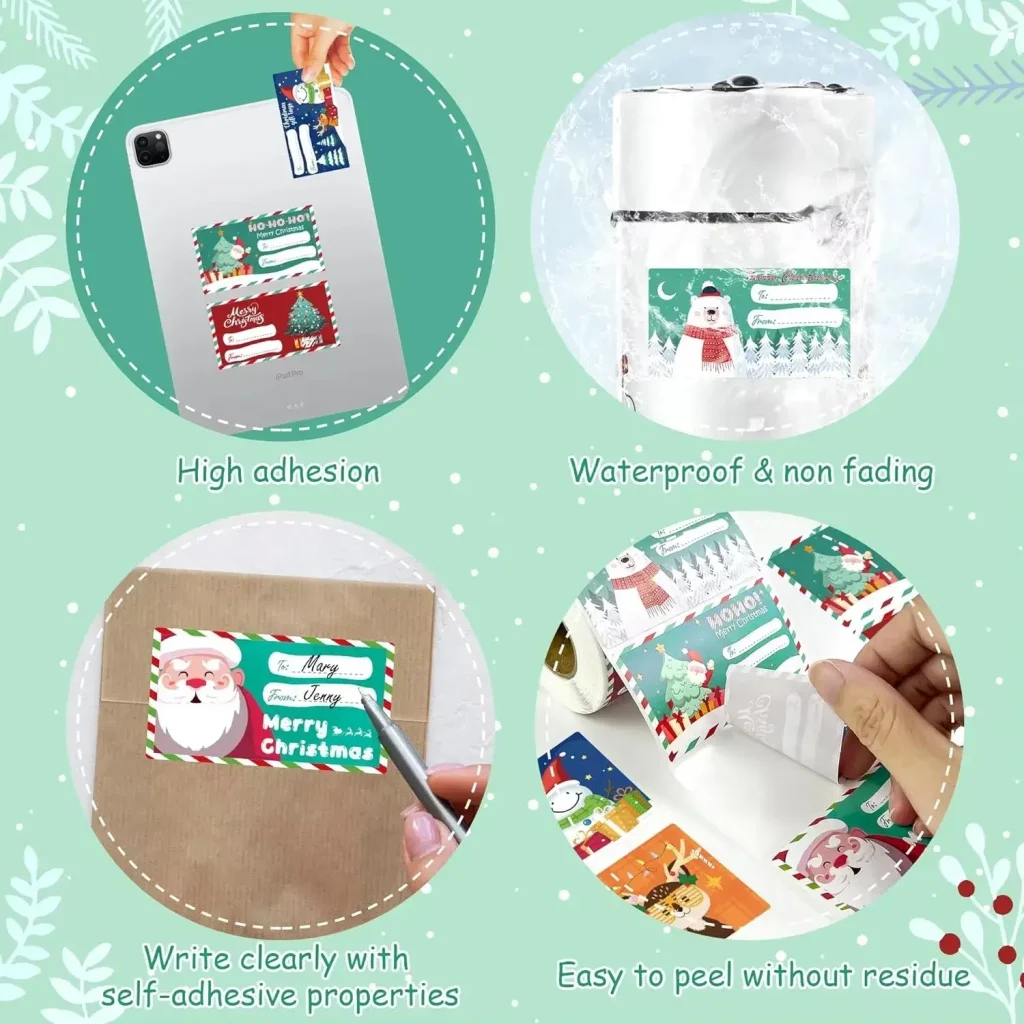 Cuộn nhãn tùy chỉnhGói 500 chiếc nhãn dán đóng gói quà tặng in theo yêu cầu, chống thấm nước, dùng để trang trí quà Giáng sinhXem xét gói 500 chiếc nhãn dán đóng gói quà tặng Giáng sinh chống thấm nước, in theo yêu cầu, dùng để trang trí quà tặng Giáng sinh – một lựa chọn cụ thể trong danh mục Nhãn dán tùy chỉnh…Xem sản phẩm
 Nhãn và miếng dánHình dán nổiHãy xem xét nhãn dán nổi như một lựa chọn cụ thể trong danh mục Nhãn và nhãn dán, đồng thời so sánh chất lượng hoàn thiện, định dạng và quy trình đặt hàng để tìm ra giải pháp phù hợp với yêu cầu của bạn.Xem sản phẩm
 Nhãn và miếng dánIn decal ô tô theo yêu cầu: Biển số tạm thời, Tem bảo vệ tạm thời, Decal chuyển nhiệt 3D, Decal từ tính dùng ngoài trời, Nhãn kim loại, polyester, PVC và vinyl chống tia UVĐánh giá dịch vụ in decal ô tô theo yêu cầu: Biển số tạm thời, Tem bảo vệ tạm thời, Decal chuyển nhiệt 3D, Decal từ tính dùng ngoài trời, Nhãn kim loại, nhãn polyester, PVC, vinyl chống tia UV…Xem sản phẩmNhãn và miếng dánNhãn dán PVC chống thấm nước theo yêu cầu, nhãn dán IML (In-Mold Label) cho dầu động cơ và sản phẩm chăm sóc da, nhãn dán vinyl, chất tẩy rửa, nhãn dán chai thực phẩmXem xét nhãn dán PVC chống thấm nước, tùy chỉnh, nhãn dán trong khuôn (IML) cho dầu động cơ, sản phẩm chăm sóc da, hóa chất, nhãn dán vinyl, chất tẩy rửa và nhãn chai thực phẩm như một lựa chọn cụ thể trong danh mục Nhãn dán…Xem sản phẩm
Các tùy chọn kết nối
Các lựa chọn thương mại liên quan đến hướng dẫn này
Các tùy chọn liên kết này giúp hướng dẫn luôn gắn liền với các danh mục sản phẩm liên quan và các lựa chọn thương mại chính mà người mua thường xem xét trước khi gửi yêu cầu.
Các câu hỏi thường gặp của người mua
What makes in-mold labels different?
In-mold labels are applied during the molding process rather than after the container is made. That creates a more integrated result and can reduce the need for a separate labeling step.
When are in-mold labels a good fit?
They are often chosen for rigid containers, tubs, buckets and other molded packaging where durability, washability or a fully integrated look matters.
Do in-mold labels require special production planning?
Yes. Mold process, material compatibility, label thickness and artwork position all need to align with the molding method for the result to be reliable.
Hướng dẫn mua hàng
Các hướng dẫn mua hàng khác trong cùng dòng sản phẩm
Tiếp tục so sánh thông số kỹ thuật, thông tin phê duyệt và các lựa chọn sản phẩm tương tự thông qua các tài liệu tham khảo liên quan này.
Nhãn và miếng dán tùy chỉnh
Bạn đã sẵn sàng biến bản tóm tắt này thành một bước đi thiết thực tiếp theo chưa?
Hãy cung cấp các thông số chính, số lượng, tình trạng bản thiết kế và địa điểm giao hàng; HKKAYU sẽ xem xét đơn hàng dựa trên thực tế sản xuất.
Điều gì thường mang lại hiệu quả trước tiên
Gửi bản tóm tắt yêu cầu ban đầu chi tiết hơn
- Bề mặt, hướng dán và yêu cầu về bề mặt hoàn thiện.
- Phương pháp sử dụng, dạng đóng gói và mức số lượng.
- Tình trạng tác phẩm nghệ thuật, thời gian phê duyệt và địa điểm giao hàng.
Reader Questions
Questions Readers Ask About In-mold Labels Design Specs
This guide is designed to clarify the decisions behind In-mold Labels Design Specs and make the next commercial step more straightforward.
Which points does this guide cover around In-mold Labels Design Specs?
Use Case / ComplianceIn-Mold Labels Design Specs, File Setup and Compliance ChecklistProjects involving in-mold labels tend to move smoothly when the technical details are settled before the press.
Who should read this guide on In-mold Labels Design Specs?
This content is most useful for brand teams, sourcing teams and packaging buyers who want practical context before ordering. It helps turn a broad topic into clearer comparisons that can support sourcing, brand review and production planning.
How can this guide support decision-making around In-mold Labels Design Specs?
Readers usually leave with a better sense of how to compare adhesion, print sharpness, finish feel, application speed and long-term appearance on the target surface. That makes it easier to judge which specification details matter most before pricing or artwork review.
What details should be prepared before requesting pricing for In-mold Labels Design Specs?
A stronger next step usually starts with size, quantity, application surface, adhesive needs, finish preference, artwork status and delivery details. Those details help the supplier answer with more useful guidance instead of generic assumptions.
What is the practical next step once In-mold Labels Design Specs is understood?
Once the main comparisons are clear, the next move is to gather reference samples, dimensions, artwork direction and quantity plans, then request guidance on the most suitable production setup for In-mold Labels Design Specs.
